
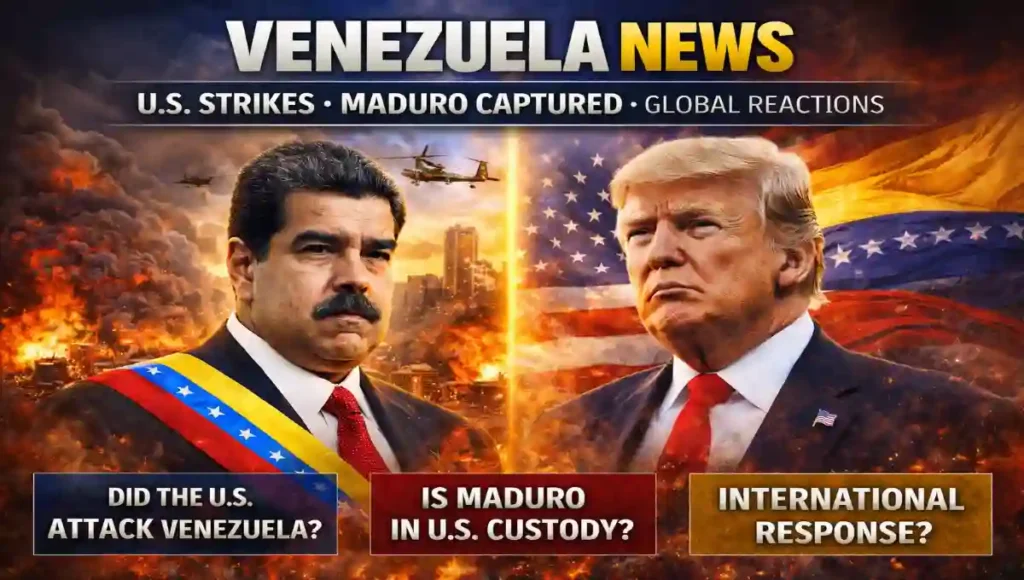
Strike Against Venezuela: The Three Hours That Changed the Course of Power
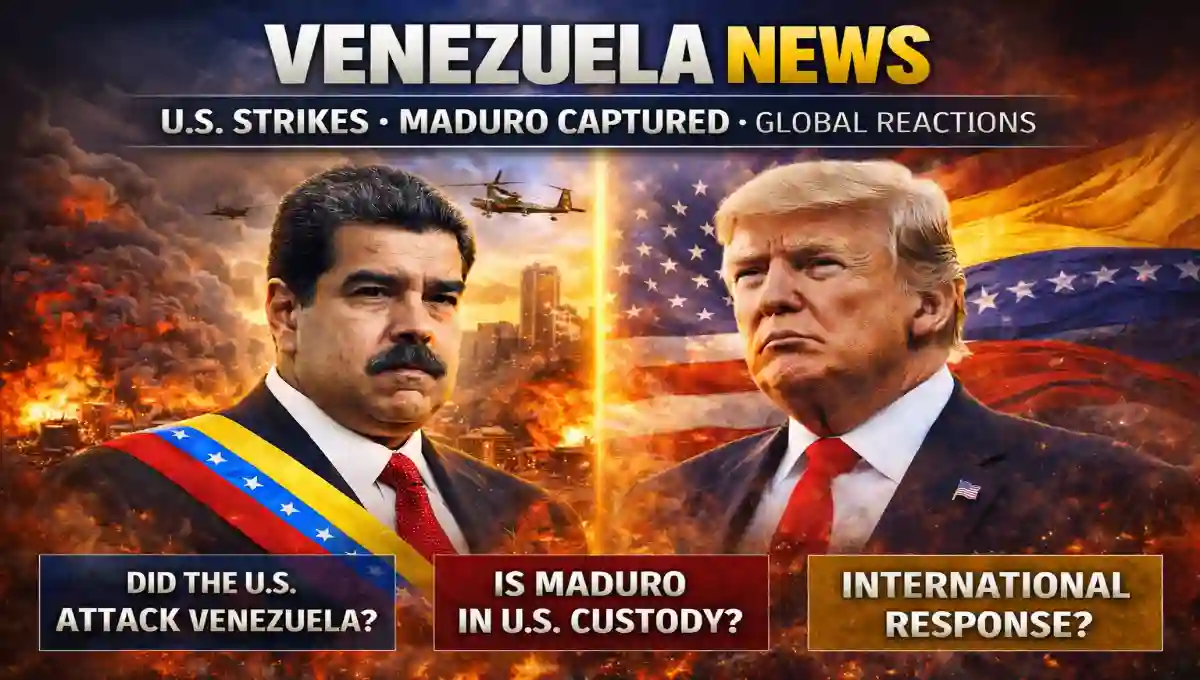
In one of the most dramatic geopolitical developments of recent years, a rapid and tightly coordinated US-led operation in Venezuela ended with President Nicolas Maduro taken into American custody. The entire mission unfolded in less than three hours, reshaping the political landscape of Latin America overnight.
How the Operation Began
According to multiple diplomatic and security sources, the operation began shortly before dawn when US forces initiated targeted strikes on key strategic locations around Caracas. These strikes were not widespread bombings but precision actions designed to neutralize command centers and restrict movement.
Communication networks in select zones reportedly went offline, while airspace restrictions were imposed almost immediately. Within minutes, Venezuelan security forces found themselves unable to coordinate an effective response.
The Three-Hour Timeline
Hour One: Isolation of Power
The first phase focused on isolating President Maduro from loyal military units. Roads leading to major government buildings were blocked, and aerial surveillance intensified. Intelligence suggests that several high-ranking officials were detained or placed under house arrest during this phase.
Hour Two: Securing the Target
During the second hour, US special forces moved closer to Maduro’s secure location. Sources claim that negotiations were briefly attempted to avoid civilian casualties. However, resistance from elements within the Venezuelan security apparatus prompted swift tactical action.
Hour Three: Transfer to US Custody
By the third hour, Maduro was reportedly extracted under heavy security and transferred to a secure US-controlled facility. Shortly afterward, confirmation emerged from American officials that the Venezuelan president was in US custody.
Why the US Acted Now
US officials justified the operation by citing long-standing allegations against the Maduro administration, including drug trafficking, human rights abuses, and destabilization of regional security. The move follows years of sanctions, diplomatic pressure, and failed negotiations.
Analysts believe the timing was influenced by mounting unrest inside Venezuela and intelligence indicating potential internal fractures within the ruling establishment.
Reaction Inside Venezuela
News of Maduro’s detention triggered mixed reactions across the country. While some citizens poured into the streets celebrating what they see as the end of an era, others expressed fear and uncertainty about the future.
Security forces remain on high alert, and interim administrative arrangements are reportedly being discussed among opposition leaders and international mediators.
Global Response and Diplomatic Shockwaves
The international response has been swift and divided. Several Western nations expressed support for what they called a decisive step toward restoring democracy. Meanwhile, countries allied with Maduro condemned the operation as a violation of sovereignty.
Emergency meetings were convened at the United Nations as diplomats debated the legality and long-term consequences of the action.
What Happens to Maduro Now?
US authorities have not disclosed Maduro’s exact location but confirmed he will face legal proceedings related to charges previously filed in American courts. Legal experts suggest the case could become one of the most significant international trials of the decade.
What Lies Ahead for Venezuela
With Maduro removed from power, Venezuela stands at a crossroads. The immediate challenge will be maintaining stability while charting a political transition. Economic recovery, humanitarian relief, and rebuilding international trust will dominate the agenda.
The three-hour operation may be over, but its consequences will unfold for years. Venezuela’s future — and its relationship with the world — has entered an entirely new chapter.
Conclusion
The strike against Venezuela and the capture of Nicolas Maduro marks a historic turning point in global politics. Whether this moment leads to lasting peace or prolonged uncertainty will depend on decisions made in the days ahead.
❓ FAQ SECTION
FAQ 1
What happened during the US strike in Venezuela?
A rapid US-led operation targeted strategic locations in Caracas, resulting in President Nicolas Maduro being taken into custody within three hours.
FAQ 2
Why did the US capture Nicolas Maduro?
US authorities cited allegations including drug trafficking, human rights abuses, and regional security threats.
FAQ 3
Is Nicolas Maduro currently in the United States?
US officials confirmed Maduro is in American custody, though his exact location has not been disclosed.
FAQ 4
How did Venezuela react to Maduro’s capture?
Reactions were mixed, with some celebrating the development while others expressed fear over political instability.
FAQ 5
Will Maduro face a trial in the US?
Legal proceedings are expected based on charges previously filed in American courts.
FAQ 6
What happens next for Venezuela?
The country faces a transitional phase involving political restructuring, economic recovery, and international negotiations.